

Research Administration and Support
What is research administration and support?
Behind every successful research program is a network of skilled professionals who keep operations running smoothly. Administration and support roles within academic and research-intensive institutions enable research by providing expertise in areas such as strategic planning, financial management, communications, and more.
Some positions focus on facilitating day-to-day operations, while others provide broader strategic, technical, or procedural guidance, and many roles blend these responsibilities. Across this spectrum, administrative and support professionals play a vital role in sustaining effective and productive research environments. Below are several key roles commonly found in research administration and support.
Explore Administrative & Support Roles
Discover that is means to work in research administration and support!
Research Grants Officer
Research grant officers are essential members of the research support ecosystem within academic institutions. Their role spans both pre- and post-award administration, providing expert guidance throughout the full lifecycle of a grant. They support researchers and their teams in developing, coordinating, and submitting grant applications across a wide range of funding programs, advise on eligibility requirements, timelines, and proposal strategies, and manage post-award reporting to funding agencies.
Responsibilities include reviewing and approving award documentation, authorizing the establishment of research accounts, and coordinating the transfer of funds between institutions. Research grant officers ensure that all funding is administered in compliance with institutional and sponsor policies, upholding high standards of accuracy, ethics, and accountability.
As key liaisons, they facilitate clear communication among researchers, sponsors, and internal stakeholders, including finance and legal teams. Through proactive oversight and informed guidance, research grant officers help maximize funding success, support responsible financial management, and contribute to the long-term sustainability of the research enterprise.
- Degree requirements vary based on the institution. Typically, a Master’s degree is required at a minimum; however, a PhD is often noted to be an asset or a requirement.
- Related research funding experience in an academic setting.
- Experience working with research funding agencies or organizations that provide grants.
- Attention to detail and accuracy – High level of precision in reviewing applications, budgets, and documentation to ensure completeness and adherence to guidelines.
- Knowledge of funding agencies and policies – Solid understanding of major funding bodies, eligibility requirements, and institutional policies governing research funding.
- Project and time management – Ability to coordinate multiple submissions, manage deadlines, and support researchers throughout the grant lifecycle.
- Communication and interpersonal skills – Strong ability to collaborate with researchers, administrators, and external partners while providing clear guidance and support.
- Analytical and critical thinking – Capacity to assess proposals, identify gaps, and provide strategic feedback to strengthen applications.
- Financial and budget literacy – Proficiency in developing and reviewing grant budgets to ensure accuracy, feasibility, and compliance with funding rules.
- Problem-solving – Ability to proactively identify issues and implement solutions throughout the pre- and post-award processes.
Research Strategy Officer
A Research Strategy Officer (or similar role) plays a hands-on, strategic role across the full lifecycle of research funding and recognition. They actively support the development, writing, and editing of grant applications and award nomination packages, enhancing clarity, coherence, and overall impact while ensuring compliance with sponsor guidelines and institutional requirements. This role differs from that of a Research Grants Officer, who focuses primarily on the administrative management of grants and funding processes rather than on the development and refinement of grant and award applications.
Working closely with faculty and research teams, they coordinate and guide applicants through every phase of the process, from opportunity identification and intent to apply, through drafting, internal review, and final submission. They provide strategic advice on potential challenges and equity, diversity, and inclusion (EDI) requirements, while helping translate research priorities into compelling narratives with clear, measurable outcomes.
The research strategy officer also develops and manages realistic timelines, aligns contributions from investigators, collaborators, and research support units, and tracks key milestones, risks, and deliverables. Throughout the process, they offer constructive feedback, ensure alignment with adjudication criteria, and facilitate access to institutional resources such as letters of support, standardized CV formats, approvals/authorizations from leadership, and relevant performance metrics. Beyond submission, they support post-award and post-competition activities by capturing lessons learned, monitoring outcomes, and advising on resubmissions, reporting, and knowledge mobilization strategies to strengthen future competitiveness and research impact.
Altogether, a research strategy officer serves as an essential partner in advancing institutional research excellence by seamlessly integrating strategic insight, project coordination, and narrative development across the funding and recognition landscape.
- Degree requirements vary based on the institution. Typically, a Master’s degree is required at a minimum; however, a PhD is often noted to be an asset or a requirement.
- Experience writing, editing, and coordinating the creation of complex, multi-stakeholder grant applications and/or award nominations.
- Relevant experience in an academic research environment.
- Strategic thinking and planning – Strong ability to develop and implement research strategies aligned with institutional priorities and funding opportunities.
- Analytical and critical thinking – Ability to assess research programs, evaluate opportunities, and identify strengths, gaps, and areas for growth.
- Funding landscape knowledge – Understanding of funding agencies, priorities, and trends to inform strategic positioning and competitiveness.
- Grant development and advisory skills – Strong ability to guide researchers in developing high-quality, competitive proposals and provide strategic feedback.
- Project and program management – Ability to coordinate complex initiatives, manage timelines, and oversee multiple projects across the research lifecycle.
- Communication – Ability to clearly communicate strategic priorities and translate complex research concepts into accessible insights.
- Data-informed decision making – Proficiency in using data and metrics to inform strategy, track performance, and support reporting.
- Organizational and operational skills – Strong ability to manage workflows, maintain documentation, and support efficient research operations.
- Problem-solving and adaptability – Ability to navigate challenges, respond to evolving priorities, and implement effective solutions in dynamic environments.
Research Program Manager
A Research Program Manager (or related titles) supports the planning, coordination, and administration of research or academic programs within an academic or health research environment. The specific focus of the role varies depending on where the position is situated, such as within a research lab, core facility, or academic/administrative department, but the unifying function is to provide the operational structure that enables programs to run effectively.
Research Program Manager in a Lab or Core Facility:
- When embedded within a research lab or shared research facility, a research program manager typically supports activities across the full research lifecycle. This may include assisting with grant development, coordinating funded research projects, managing timelines and reporting requirements, and supporting day-to-day lab or facility operations. The role often involves tracking budgets and deliverables, coordinating collaborations, ensuring compliance with institutional and funder requirements, and serving as a central point of communication among investigators, trainees, postdocs, and partners. In this context, the program manager helps researchers focus on scientific work by overseeing the administrative and operation aspect or a research lab or facility.
Research Program Manager in a Department:
- Within a department or central administrative unit, a research program manager may be responsible for overseeing an educational, training, or institutional research program. This can include coordinating curricula or professional development programming, supporting faculty and learners, administering awards or evaluations, and/or maintaining program documentation. The role often involves liaising with multiple internal stakeholders, ensuring alignment with institutional policies, and managing logistics, communications, and reporting for the program. In some cases, the program manager may lead defined initiatives providing continuity, oversight, and operational leadership.
Depending on the level of the role, a research program manager may also supervise staff or oversee a unit responsible for research operations or program/service delivery. At more senior levels, the role can include strategic planning, process improvement, and contributing to the long-term development of research or educational programs.
Overall, research program managers provide essential operational and administrative leadership. By establishing clear systems, supporting coordination, and ensuring compliance, they enable research, training, and educational programs to function smoothly and advance institutional and program-level objectives.
- Varying degree requirements depending on department or institution.
- Experience in a research or academic setting.
- Experience managing projects and budgets, writing grants or funding proposals.
- Project management certification or training is an asset.
- Strategic thinking and planning – Strong ability to develop and implement research strategies aligned with institutional priorities and funding opportunities.
- Analytical and critical thinking – Ability to assess research programs, evaluate opportunities, and identify strengths, gaps, and areas for growth.
- Funding landscape knowledge – Understanding of funding agencies, priorities, and trends to inform strategic positioning and competitiveness.
- Grant development and advisory skills – Strong ability to guide researchers in developing high-quality, competitive proposals and provide strategic feedback.
- Project and program management – Ability to coordinate complex initiatives, manage timelines, and oversee multiple projects across the research lifecycle.
- Communication – Ability to clearly communicate strategic priorities and translate complex research concepts into accessible insights.
- Data-informed decision making – Proficiency in using data and metrics to inform strategy, track performance, and support reporting.
- Organizational and operational skills – Strong ability to manage workflows, maintain documentation, and support efficient research operations.
- Problem-solving and adaptability – Ability to navigate challenges, respond to evolving priorities, and implement effective solutions in dynamic environments.
Resources to Help You Succeed
Pursuing a career in academic administration and support offers the opportunity to contribute to research, education, and institutional success in meaningful ways. Whether your interests lie in program coordination, research administration, student services, communications, human resources, finance, or operational management, these roles play a vital part in supporting trainees, faculty, and research teams across academic and healthcare environments.
Explore the resources below to learn more about career pathways, professional development opportunities, and the skills needed to thrive in academic administrative and support roles. From understanding job responsibilities and building relevant competencies, to networking with professionals and identifying potential career opportunities, these resources can help you navigate and grow within this dynamic career path.
Access essential resources to support you at every stage of your journey toward a rewarding career in academic administration and support services!
Access essential resources to support you at every stage of your journey!
Skillsoft Percipio Learning Platform is a free virtual learning platform for TeamUHN that offers self‑paced courses and live classes to help build skills in leadership, business, communication, and more. The platform includes training and certification paths from the Project Management Institute, which can fulfill the project management education requirements for the Project Management Professional (PMP) certification!
Each year, the UHN Office of Research Trainees (ORT) hosts a workshop focused on strengthening scholarship and fellowship applications. Designed for trainees and postdoctoral researchers, the workshop covers key elements of persuasive research writing, including articulating research significance, aligning proposals with adjudication criteria, and crafting clear, compelling narratives. Participants receive practical tips, reviewing successful applications, and opportunities for guided exercises and feedback, equipping them with strategies to communicate their ideas effectively and enhance their competitiveness across funding opportunities.
View ORT’s upcoming training opportunities here.
The University of Toronto (U of T) Health Sciences Writing Centre provides U of T undergraduate and graduate students with personalized writing support. Students can meet with writing instructors who offer tailored guidance and feedback on a wide range of academic and professional documents, including grants, personal statements, scholarship applications, CVs, and more.
The University of Toronto (U of T) Graduate Centre for Academic Communication (GCAC) provides U of T graduate students with advanced training in academic writing and speaking. The GCAC offerings include non-credit courses, live and on-demand workshops, individualized writing consultations, boot camps, and resources.
Meet UHN Alumni
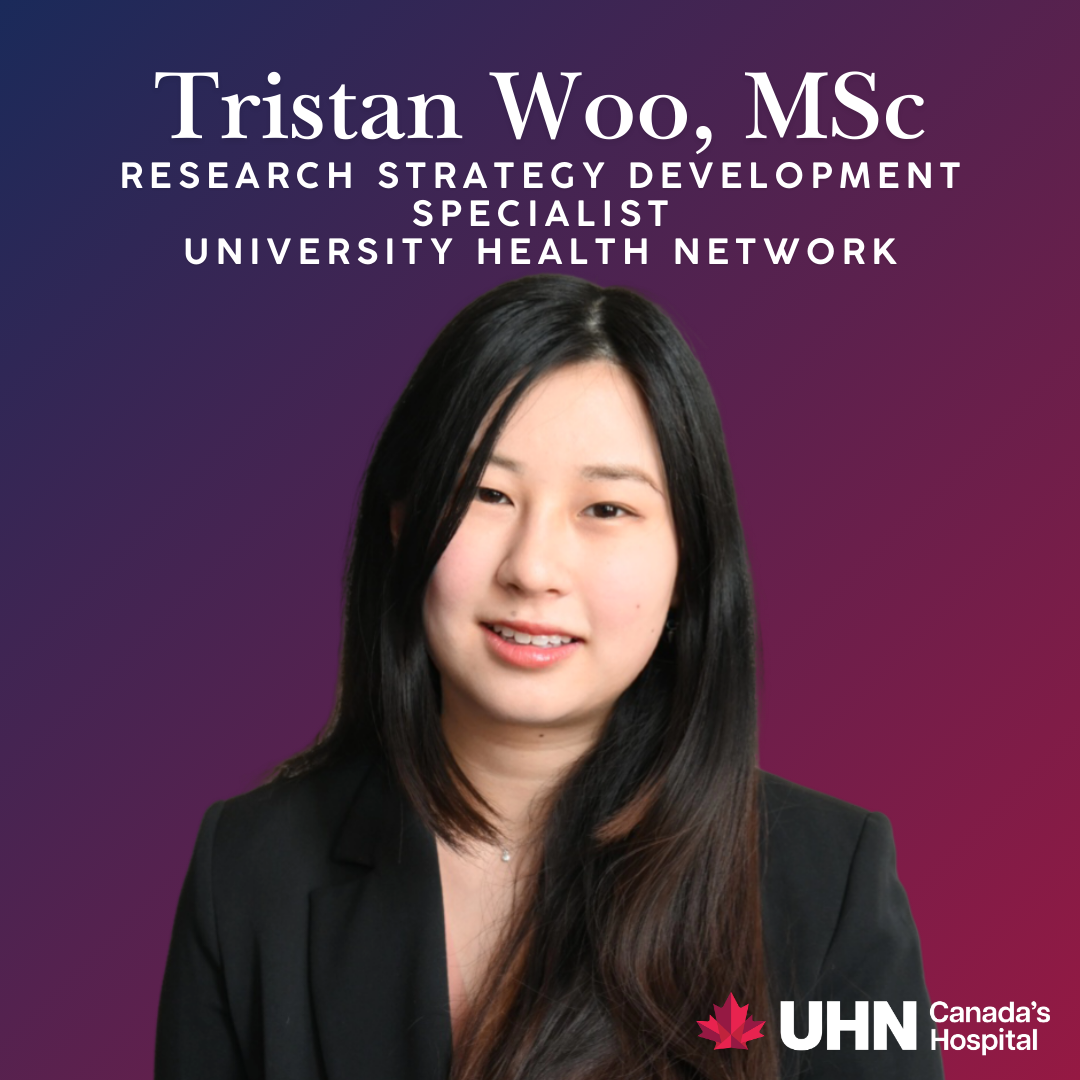
Tristian Woo is a Research Strategy Development Specialist with UHN’s Strategic Research Initiatives Development (StRIDe) team and a former graduate student at the Princess Margaret Cancer Centre.
“For anyone interested in any type of science communications role, it’s important that you take the time to explore opportunities to communication science, like asking your PI to be more ivolved in grant applications, applying for scholarships, etc. These will build skills that you can put on your resume to help boster your science communications experience.”
To learn more about Tristan and their journey towards becoming and Research Stratedy Development Specialist, you can check out our “Career Pathways in Academic” Panel hosted on October 29, 2025!
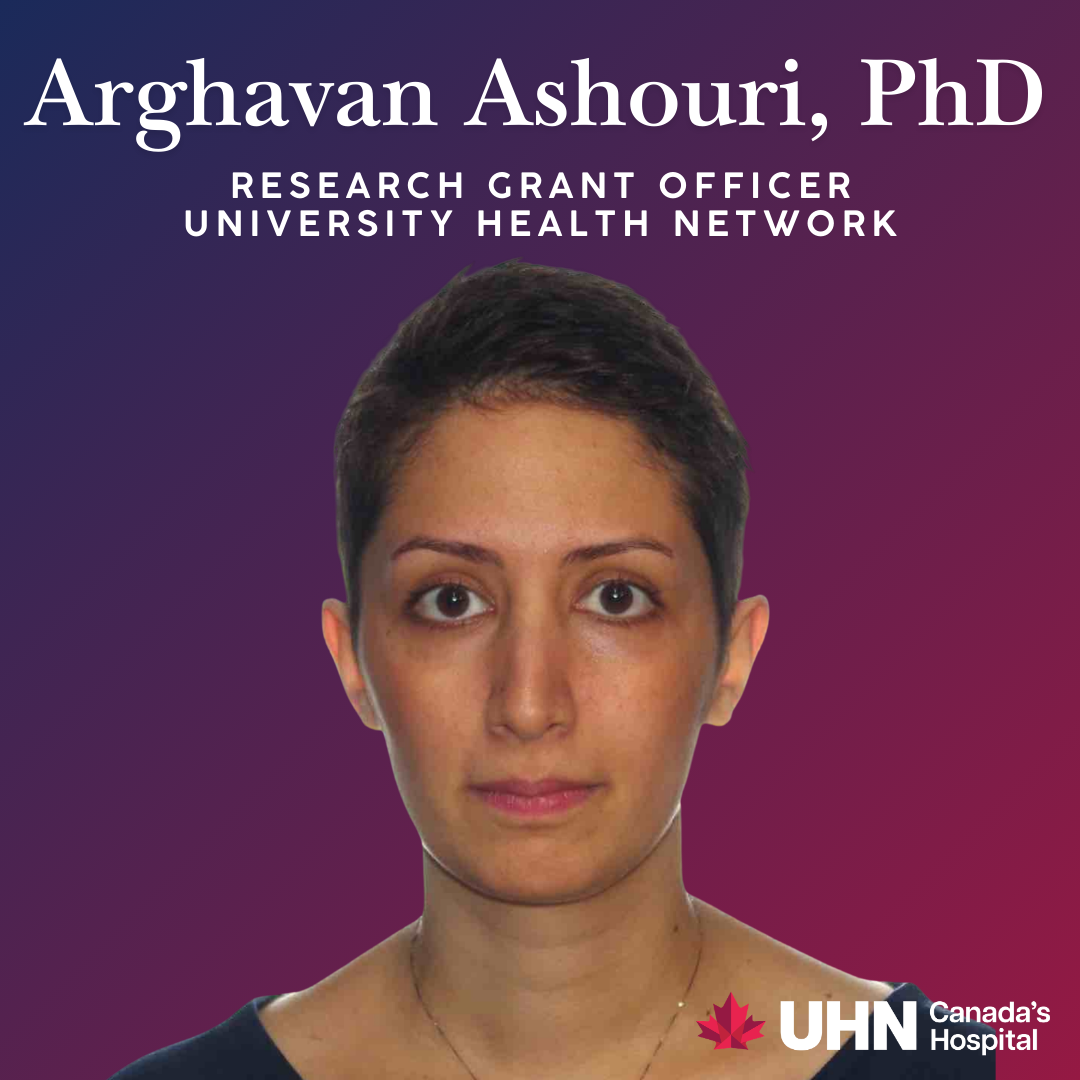
Dr. Arghavan Ashouri is a former Research Grants Officer at UHN and a postdoctoral researcher at the Princess Margaret Cancer Centre.
To learn more about the experiences and advice from Dr. Arghavan Ashouri and several other academic professionals, check out our “Career Pathways in Academia” panel from October 29, 2025.
Disclosure: This resource is provided for informational purposes only. All efforts have been made to ensure the accuracy and clarity of the content; however, specific details, requirements, and expectations may vary across institutions and positions. Readers should always consult individual job postings or official organizational resources for the most current and authoritative information.