

Research Staff
What are research staff?
Research staff contribute specialized expertise that supports the planning, delivery, and advancement of research activities. Their roles often combine research, operational, and technical responsibilities, helping teams manage projects, navigate funding and compliance requirements, and translate ideas into impactful outcomes.
While some positions focus on conducting and supporting research directly, others provide coordination, guidance, and oversight that enable research programs to operate effectively. Many research staff also play an important role in mentorship and capacity building, fostering collaboration and strengthening research excellence across institutions. Below are several key roles commonly found within the research staff community.
Explore Administrative & Support Roles
Discover what it means to work in various research staff roles!
Research Technician
A research technician is a vital member of a scientific research team who supports the day-to-day operations of a laboratory or facility. Working under the supervision of principal investigators, senior researchers, or department leads, research technicians contribute to the execution of experimental protocols, manage research data and sample repositories, and ensure accurate data collection, documentation, and storage.
Research technicians assist with laboratory experiments, data analysis, and interpretation, while also maintaining laboratory equipment and supplies. They support compliance with safety regulations, ethical guidelines, and institutional procedures, helping to ensure that research activities are conducted responsibly and efficiently. In many settings, they help develop, optimize, or troubleshoot experimental methods, and may train lab members in standard techniques and protocols.
In addition to their technical contributions, research technicians play an important operational role within the research environment. They are often responsible for ordering supplies, tracking inventory, coordinating with vendors or service providers, and supporting general lab organization and workflow. They contribute to record keeping, quality control, and reporting, and may assist with preparing figures, summaries, or documentation for internal reports, publications, conferences, and/or grant-related materials.
Research technicians communicate findings clearly, document experimental outcomes thoroughly, and collaborate closely with scientists and other team members. They frequently balance independent responsibilities with collaborative work, adapting to evolving project needs and research priorities.
Overall, research technicians are essential to the success of research initiatives, providing the technical expertise, organizational support, and operational stability that enable scientific teams to conduct high-quality, reproducible, and impactful research.
- Bachelor’s degree in a relevant field at a minimum. A graduate degree may be required in specific disciplines or research labs.
- Typically,1 year of relevant laboratory experience is required at a minimum.
- Experience with relevant laboratory techniques for the research group or facility.
- Attention to detail and accuracy – Strong ability to follow protocols precisely, perform experiments carefully, and ensure the reliability and reproducibility of results.
- Organization and time management – Ability to manage multiple experiments and tasks efficiently while maintaining timelines and prioritizing responsibilities.
- Analytical thinking and problem-solving – Capacity to interpret data, troubleshoot experimental issues, and identify practical solutions in a research setting.
- Written and verbal communication – Effective ability to document findings clearly and communicate results and updates with team members and supervisors.
- Technical proficiency – Strong ability to operate and maintain laboratory equipment and utilize relevant data analysis tools and software.
- Collaboration and interpersonal skills – Ability to work effectively with researchers, trainees, and staff to support shared research objectives.
- Record-keeping and documentation – Strong ability to maintain accurate, detailed, and organized experimental records and data logs.
- Administrative and operational skills – Ability to assist with lab operations, including inventory management, ordering supplies, and maintaining compliance with protocols and policies.
Research/Scientific Associate
A research or scientific associate is an experienced research professional who contributes substantially to the design, execution, and progression of scientific research within academic institutions. Positioned between technical and senior scientific roles, research associates apply advanced technical expertise and scientific judgement to support ongoing research projects, often working with a high level of independence while collaborating closely with principal investigators, other research staff, trainees, and postdoctoral researchers.
Research associates typically work within principal investigator-led research laboratories, or in specialized core facilities that support multiple research groups. In these settings, they conduct and coordinate complex experimental work, apply established and emerging methodologies, and contribute to the development and optimization of protocols to address defined research questions. In their role, research associates manage components of research projects, supporting timelines, data quality, and deliverables while ensuring scientific rigour and reproducibility. They are actively involved in data collection, analysis, and interpretation, and contribute to maintaining well-organized research records, datasets, and documentation. In addition, research associates contribute to knowledge dissemination through the preparation of figures, reports, manuscripts, and presentations, and may support grant-related activities such as data generation, methods development, and progress reporting. They collaborate with multidisciplinary teams and, where applicable, external partners to support research objectives and translation efforts.
Overall, research and scientific associates provide advanced technical expertise, scientific continuity, and project-level leadership that strengthen research programs. Their role bridges hands-on experimentation and scientific direction, enabling research teams to advance complex studies while maintaining high standards of quality, efficiency, and collaboration.
- Graduate degree (typically a PhD) in a related discipline.
- Postdoc experience is considered an asset.
- Demonstrated track record of leading interdisciplinary research programs.
- Experience managing complex, multi-stakeholder research projects.
- Advanced research design and methodological expertise – Strong ability to apply qualitative, quantitative, and mixed-methods approaches; design and execute complex experiments or studies; and adapt methodologies to address defined research questions.
- Data analysis and scientific judgment – Ability to analyze, interpret, and critically evaluate complex datasets, troubleshoot research challenges, and apply scientific judgment to support rigorous and reproducible research.
- Scientific writing and knowledge dissemination – Proven ability to prepare high-quality figures, reports, manuscripts, and presentations, and to contribute effectively to publications, progress reports, and other dissemination activities.
- Project coordination and time management – Strong capability to manage components of research projects, support timelines and deliverables, and balance multiple priorities with a high degree of independence.
- Technical proficiency – Ability to apply established and emerging research techniques, develop or refine protocols, and ensure technical excellence and continuity within a research program or facility.
- Collaboration and stakeholder engagement – Ability to work effectively with principal investigators, research staff, trainees, postdoctoral researchers, and multidisciplinary teams to support shared research objectives.
- Leadership and mentorship – Capacity to provide project-level leadership, support trainee development, and contribute to a collaborative and high-performing research environment.
- Research documentation and data management – Strong ability to maintain accurate, well-organized research records, datasets, and documentation that support data quality, transparency, and reproducibility.
Staff Scientist
A staff scientist is a senior research professional who plays a critical role in advancing and sustaining scientific programs within academic and research-intensive settings. With substantial research experience and domain expertise, staff scientists contribute at a high level to the development, leadership, and execution of complex research initiatives. They may work within research laboratories under the direction of a principal investigator or within, and in some cases lead, core facilities or shared research platforms that support multiple research programs. Staff scientists often work with a high degree of independence while collaborating closely with principal investigators, trainees, postdoctoral researchers, research staff, and external partners.
In this role, staff scientists design, lead, and execute research projects or programs by developing, refining, and optimizing experimental approaches and analytical methodologies to address key scientific questions related to the lab’s or facility’s expertise. They oversee complex research projects, managing timelines, resources, and deliverables to ensure projects progress efficiently and meet scientific objectives. Throughout the research lifecycle, staff scientists uphold rigorous standards for data collection, analysis, interpretation, and reproducibility.
Staff scientists frequently play a leadership role in laboratory and research operations, particularly in settings involving specialized technologies, core facilities, or technical infrastructure. They may oversee daily operations, establish and refine workflows, implement best practices, and ensure that equipment, platforms, and processes function effectively and reliably. In facility-based roles, staff scientists often provide expert consultation to a broad range of users and support the adoption of new methodologies or technologies across research groups.
In addition to research leadership, staff scientists contribute to the dissemination of scientific knowledge through the preparation of manuscripts, reports, and conference presentations. They are often actively involved in grant development, funding applications, and progress reporting, providing scientific and technical input that supports both new and ongoing funding efforts. Their contributions help translate research findings into publications, funded programs, and broader scientific impact.
Staff scientists also collaborate with multidisciplinary teams and external stakeholders, supporting research translation, partnership development, and stakeholder engagement. They play an important mentorship and training role by guiding trainees, technicians, and junior researchers, sharing technical expertise, and supporting skill development. At the same time, they ensure adherence to institutional policies, safety requirements, and ethical standards.
Overall, staff scientists provide scientific leadership, technical continuity, and operational expertise that strengthen research programs and facilities. Their work supports both day-to-day research excellence and the long-term strategic direction and sustainability of scientific initiatives within academic environments.
- PhD in a relevant discipline.
- Postdoctoral research experience is often noted as a requirement or asset.
- Demonstrated track record of research excellence (e.g., publications, presentations, project leadership).
- Experience managing or leading complex research projects or programs.
- Experience working collaboratively across multidisciplinary teams.
- Experience with grant writing and securing or supporting research funding.
- Advanced analytical thinking and problem-solving – Strong ability to critically evaluate complex data, troubleshoot scientific challenges, and apply expert judgment to guide research direction and decision-making.
- Scientific communication and dissemination – Excellent ability to communicate complex scientific concepts clearly through manuscripts, reports, grant materials, and presentations to diverse academic and external audiences.
- Independent leadership and initiative – Proven capacity to lead research programs or technical areas with minimal supervision, driving projects forward while aligning with broader institutional goals.
- Project and program management – Strong ability to oversee complex research initiatives, manage timelines and resources, and ensure delivery of high-quality scientific outputs.
- Scientific leadership and mentorship – Ability to mentor trainees, technicians, and junior staff, foster skill development, and contribute to a collaborative, high-performing research environment.
- Collaboration and stakeholder engagement – Strong ability to work effectively with principal investigators, multidisciplinary teams, core facilities, and external partners to support shared research objectives.
- Adaptability in dynamic research environments – Capacity to navigate evolving priorities, emerging technologies, and interdisciplinary settings while maintaining scientific and operational excellence.
- Strategic research alignment – Ability to align research activities with programmatic priorities, funding objectives, and long-term scientific and institutional strategies.
- Advanced technical and methodological expertise – Deep expertise in relevant research methodologies, technologies, platforms, or analytical approaches, including their development, optimization, and adoption.
Resources to Help You Succeed
Pursuing a career in academic administration and support offers the opportunity to contribute to research, education, and institutional success in meaningful ways. Whether your interests lie in program coordination, research administration, student services, communications, human resources, finance, or operational management, these roles play a vital part in supporting trainees, faculty, and research teams across academic and healthcare environments.
Explore the resources below to learn more about career pathways, professional development opportunities, and the skills needed to thrive in academic administrative and support roles. From understanding job responsibilities and building relevant competencies, to networking with professionals and identifying potential career opportunities, these resources can help you navigate and grow within this dynamic career path.
Access essential resources to support you at every stage of your journey toward a rewarding career in academic administration and support services!
Access essential resources to support you at every stage of your journey!
Skillsoft Percipio Learning Platform is a free virtual learning platform for TeamUHN that offers self‑paced courses and live classes to help build skills in leadership, business, communication, and more. The platform includes training and certification paths from the Project Management Institute, which can fulfill the project management education requirements for the Project Management Professional (PMP) certification!
Each year, the UHN Office of Research Trainees (ORT) hosts a workshop focused on strengthening scholarship and fellowship applications. Designed for trainees and postdoctoral researchers, the workshop covers key elements of persuasive research writing, including articulating research significance, aligning proposals with adjudication criteria, and crafting clear, compelling narratives. Participants receive practical tips, reviewing successful applications, and opportunities for guided exercises and feedback, equipping them with strategies to communicate their ideas effectively and enhance their competitiveness across funding opportunities.
View ORT’s upcoming training opportunities here.
The University of Toronto (U of T) Health Sciences Writing Centre provides U of T undergraduate and graduate students with personalized writing support. Students can meet with writing instructors who offer tailored guidance and feedback on a wide range of academic and professional documents, including grants, personal statements, scholarship applications, CVs, and more.
The University of Toronto (U of T) Graduate Centre for Academic Communication (GCAC) provides U of T graduate students with advanced training in academic writing and speaking. The GCAC offerings include non-credit courses, live and on-demand workshops, individualized writing consultations, boot camps, and resources.
A panel discussion hosted by Research Professionals @ UHN, featuring UHN research staff who began their careers as research technicians and have since built unique career paths across a variety of roles and departments within UHN.
Meet UHN Alumni
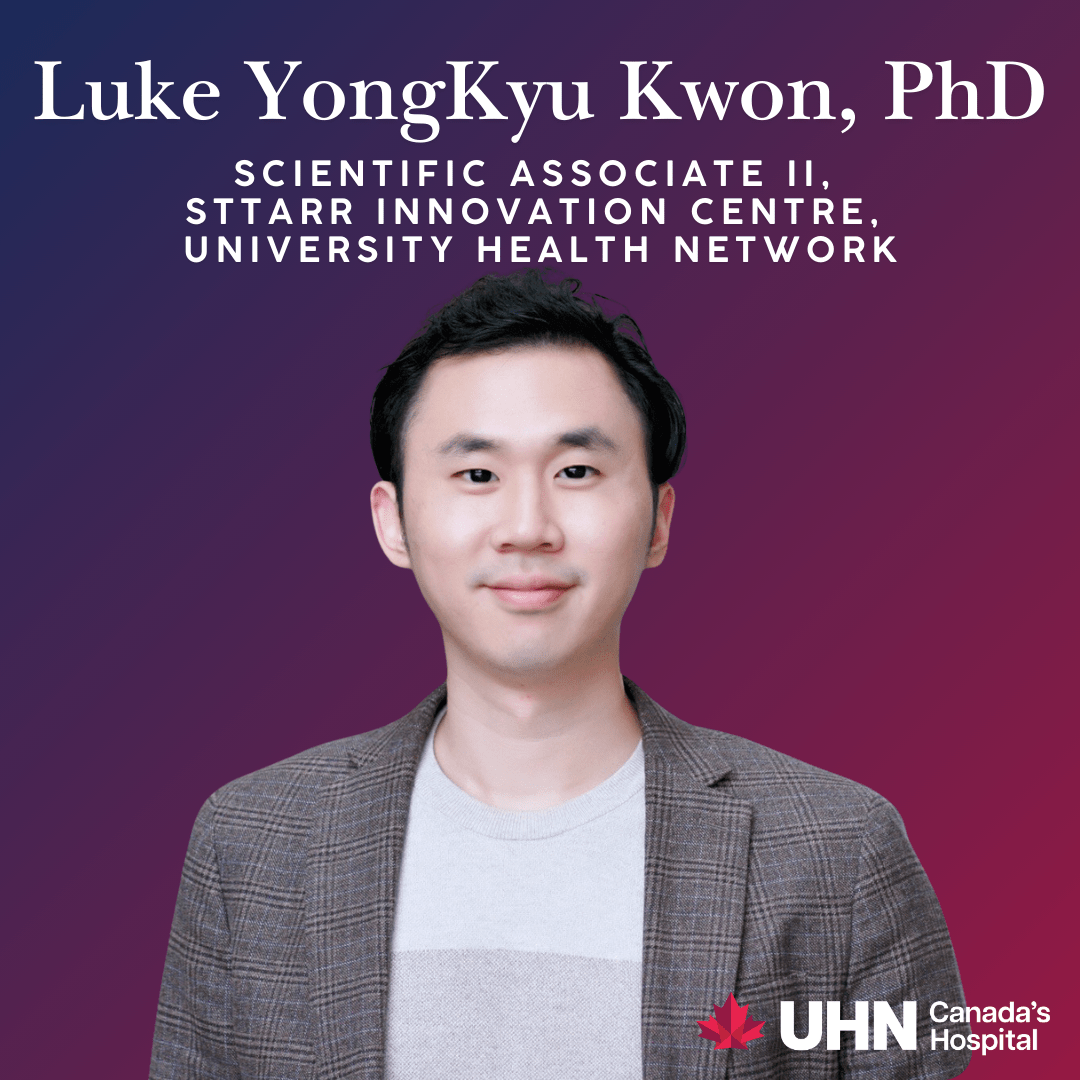
Dr. Luke YongKyu Kwon is a Scientific Associate II with UHN’s Spatio-Temporal Targeting and Amplification of Radiation Response (STTARR) Innovation Centre. Prior to joining UHN’s STTARR Innovation Centre, Luke completed a PhD under the supervision of Dr. Raymond Reilly, a UHN Affiliate Scientist.
“Job descriptions often outline an ideal candidate, but strong applicants typically meet the core requirements while showing clear potential to grow into the remaining areas – make sure you highlight this in your application!”
To learn more about Dr. Luke YongKyu Kwon and his journey towards becoming a Scientific Associate, you can read our alumni spotlight, written by Crizza Ching, ORT Communications Assistant and UHN Graduate Student.
Disclosure: This resource is provided for informational purposes only. All efforts have been made to ensure the accuracy and clarity of the content; however, specific details, requirements, and expectations may vary across institutions and positions. Readers should always consult individual job postings or official organizational resources for the most current and authoritative information.