

Research & Development (R&D)
What is Research & Development?
Research and development (R&D) is the engine of innovation within industry organizations. R&D teams are responsible for exploring new ideas, generating scientific and technical insights, and transforming discoveries into products, technologies, and solutions that address unmet needs. Whether developing new therapeutics, advancing medical devices, improving manufacturing processes, or creating digital health tools, R&D professionals help organizations remain competitive and drive future growth.
For trainees and postdoctoral researchers, R&D offers an opportunity to apply research skills in a different setting while contributing to the development of products and solutions that advance science, improve lives, and drive business growth.
Explore Research & Development Roles
Discover what it means to work in research & development roles and the common job qualifications!
Principal Scientist
Principal Scientists are scientific leaders who guide the direction of research and development programs within industry organizations. They are responsible for identifying scientific opportunities, shaping research strategies, and overseeing projects. While they may remain actively involved in research, their role often includes providing leadership, mentorship, and scientific oversight to project teams.
Principal Scientists work across a wide range of sectors, including biotechnology, pharmaceuticals, healthcare, medical devices, engineering, technology, and consumer products. They help organizations determine which scientific questions to pursue, evaluate emerging trends and technologies, and make decisions about research priorities. Their work contributes to both long-term innovation strategies and the successful advancement of specific projects.
A key aspect of the role involves leading multidisciplinary teams and collaborating with colleagues from areas such as clinical development, regulatory affairs, manufacturing, product management, data science, and business strategy. Principal Scientists provide scientific expertise that helps guide major decisions throughout the research and development process, ensuring projects are grounded in strong evidence while aligning with organizational objectives.
In addition to scientific leadership, Principal Scientists frequently communicate complex findings to diverse audiences, including senior leadership, external collaborators, and non-technical stakeholders. They may contribute to strategic planning, establish external partnerships, evaluate new technologies, and help organizations identify opportunities for growth and innovation.
For individuals with advanced research training, this role represents a pathway to scientific leadership outside academia. Many of the skills developed through graduate and postdoctoral research, including critical thinking, experimental design, project leadership, mentorship, and scientific communication, are directly transferable to Principal Scientist positions.
- Principal Scientist positions typically require a PhD or equivalent advanced degree, along with substantial research or industry experience in a relevant discipline.
- Advanced expertise within a specialized field of research
- Experience leading complex research programs or multidisciplinary projects
- Demonstrated record of scientific achievement and problem-solving
- Experience mentoring, supervising, or providing scientific leadership to teams
- Strong communication and stakeholder engagement experience
- Leadership – Ability to establish research priorities, guide scientific strategy, and provide direction for complex projects
- Strategic thinking – Capacity to identify emerging opportunities, assess risks, and align scientific initiatives with organizational goals
- Research expertise – Deep understanding of scientific methods and the ability to critically evaluate evidence and research approaches
- Decision-making – Ability to make informed judgments in situations involving uncertainty, competing priorities, or incomplete information
- Collaboration – Skill in working effectively across multidisciplinary teams and fostering productive partnerships
- Mentorship – Ability to support the professional development of scientists and contribute to a collaborative research culture
- Scientific communication – Ability to communicate complex concepts clearly to technical and non-technical audiences
- Project leadership – Experience coordinating resources, managing priorities, and ensuring projects progress toward key milestones
- Innovation mindset – Capacity to identify novel ideas, evaluate new technologies, and drive continuous improvement
- Adaptability – Ability to navigate evolving scientific, technological, and business environments while maintaining a strategic perspective
Product Development Manager
Product Development Managers oversee the planning, development, and delivery of products and solutions that meet user needs and organizational objectives. They play a central role in coordinating activities across scientific, technical, operational, and commercial teams to guide products from concept through development and launch. Depending on the industry, this may include pharmaceuticals, medical devices, biotechnology, healthcare technologies, consumer products, software, engineering solutions, or other innovation-driven products.
Their work involves defining product goals, evaluating opportunities, gathering input from stakeholders, and ensuring development activities align with customer needs, market trends, and business priorities. Product Development Managers use data, user feedback, industry knowledge, and strategic insights to inform decisions throughout the product lifecycle and support the successful delivery of new products or product improvements.
Product Development Managers collaborate closely with multidisciplinary teams, including researchers, engineers, designers, regulatory specialists, manufacturing teams, marketing professionals, and business leaders. They help translate technical and scientific information into development plans, coordinate competing priorities, and ensure projects progress efficiently toward key milestones.
A significant part of the role involves balancing multiple considerations, including functionality, feasibility, quality, timelines, cost, user experience, and regulatory requirements. They are often responsible for facilitating communication across teams, managing risks, and ensuring that development efforts remain aligned with broader organizational goals.
For individuals with research training, this role offers an opportunity to apply analytical and problem-solving skills in a highly collaborative environment. Graduate and postdoctoral researchers often bring valuable experience in project management, stakeholder engagement, evidence-based decision-making, and communicating complex information, all of which are transferable to product development leadership roles.
- Degree requirements vary by industry and organization. Many Product Development Managers hold undergraduate or graduate degrees in scientific, engineering, health, or technical disciplines, often paired with relevant industry experience.
- Experience leading or contributing to complex projects involving multiple stakeholders
- Demonstrated ability to coordinate activities across cross-functional teams
- Experience using data and evidence to support decision-making
- Strong communication and organizational skills
- Familiarity with product development processes, innovation, commercialization, or customer-focused design is often considered an asset
- Project leadership – Ability to coordinate activities, manage priorities, and guide projects toward successful outcomes
- Strategic thinking – Capacity to assess opportunities, anticipate challenges, and align development efforts with organizational goals
- Stakeholder engagement – Ability to build relationships and collaborate effectively with diverse teams and partners
- Communication – Skill in translating complex technical information into clear and actionable plans for different audiences
- Problem-solving – Ability to identify obstacles, evaluate options, and develop practical solutions in dynamic environments
- Data-informed decision-making – Capacity to analyze information, interpret market or user insights, and use evidence to guide product strategy
- Organization and prioritization – Ability to manage multiple projects, timelines, and competing demands simultaneously
- Collaboration – Experience working across scientific, technical, operational, and commercial functions to achieve shared objectives
- Adaptability – Capacity to respond to changing priorities, emerging opportunities, and evolving stakeholder needs
- Customer and user focus – Understanding of how products create value for users and the ability to incorporate user perspectives into development decisions
Resources to help you land a research & development role
Access essential resources to support you at every stage of your journey toward securing an R&D role!
A University of Toronto student initiative created to bridge the gap between academia and industry. LSCDS hosts networking events, mentorship programs, industry team case studies, career seminar series, and more.
BioTalent Canada provides technical skills training designed for the Canadian bio-economy, including programs on the fundamentals of scientific report writing, good laboratory practice (GLP), good manufacturing practice (GMP), quality assurance/quality control (QA/QC), and good clinical practice (GCP).
An immersive talent development program aimed at producing industry-ready, highly qualified personnel through comprehensive training initiatives with deep industry engagement.
A series of videos covering career development topics, including how to convert your CV to a resume, questions to ask when networking, job searching tips, how to use LinkedIn, networking tips for introverts, how to prepare for interviews, and more.
The Effective Mentorship Training Program is an annual program offered by the UHN Office of Research Trainees for UHN graduate students and postdoctoral researchers who will be supervising summer students. The program covers topics such as effective communication, aligning expectations, assessing understanding, establishing inclusive practices, fostering independence, and promoting professional development.
Skillsoft Percipio Learning Platform is a free virtual learning platform for TeamUHN that offers self‑paced courses and live classes to help build skills in leadership, business, communication, and more. The platform also includes training and educational content that can be applied toward the Project Management Institute’s requirements for the Project Management Professional (PMP) certification!
Meet UHN Alumni
Meet UHN alumni who have gone on to build impactful and influential careers in research and development!
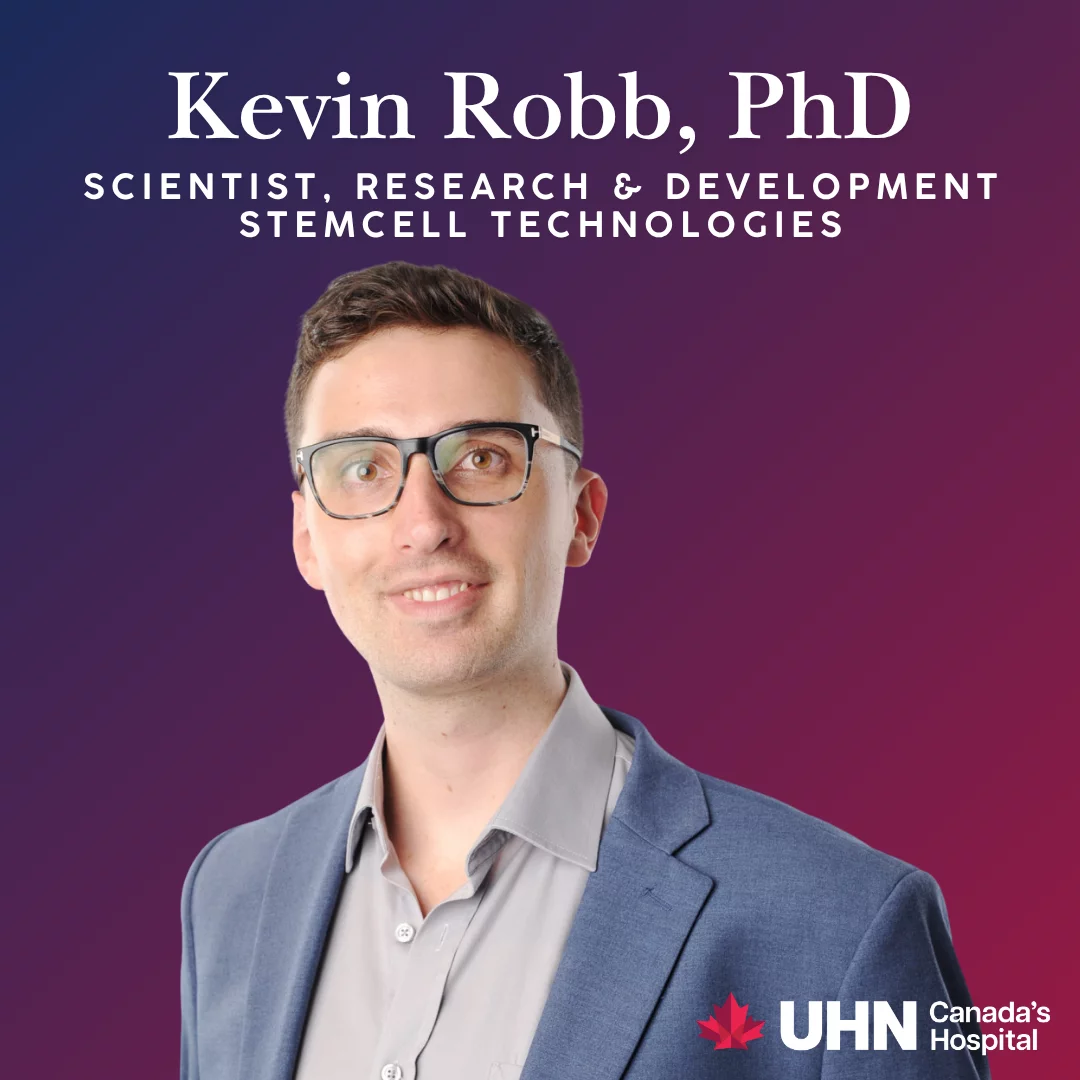
Dr. Kevin Robb is a Scientist, Research & Development at STEMCELL Technologies. Dr. Robb is also a former PhD student and postdoctoral researcher at UHN.
Attend career webinars and talk to people in your networks. The more informed you are about the different types of roles and companies, the more informed a decision you can make on whether it could be a good fit.
To learn more about Dr. Robb and his journey towards becoming a Scientist at STEMCELL Technologies, you can read our alumni spotlight, written by Crizza Ching, ORT Communications Assistant and Graduate Student.
Disclosure: This resource is provided for informational purposes only. All efforts have been made to ensure the accuracy and clarity of the content; however, specific details, requirements, and expectations may vary across institutions and positions. Readers should always consult individual job postings or official organizational resources for the most current and authoritative information.