

Research and Teaching Faculty
What are faculty positions?
Faculty roles within academic institutions encompass diverse responsibilities, but they are often organized into distinct streams that reflect their primary contributions to the academic system. Among these, research-stream and teaching-stream faculty represent two types of faculty positions that advance both research and education. Working in universities, colleges, academic hospitals, and other institutions, individuals in these positions drive new research breakthroughs or enhance student learning and experience.
Explore Research & Teaching Faculty Roles
Discover what it means to work in research and teaching faculty roles and the common qualifications and application requirements!
Research-Stream Faculty
A research-stream faculty’s primary role is to conduct and advance scholarly research. They design and oversee independent and collaborative research programs, secure external funding through competitive grants, and disseminate new knowledge through publications, presentations, and conferences.
Research-stream faculty set the overarching vision and strategic direction of their research programs. They develop research plans, define projects, and guide the work of staff, trainees, and postdoctoral researchers. Their leadership includes providing expert advice, ensuring alignment with the program’s goals, and fostering a productive research environment. They often collaborate across departments, institutions, and sectors, including industry, government, and community partners, to address complex and real-world challenges. While their classroom teaching responsibilities can vary significantly across the role and institutions and are less than teaching‑stream faculty, they contribute significantly to training and education through supervision, mentorship, and specialized instruction in their research groups.
Hospital‑based and university‑based research stream faculty share a common commitment to advancing knowledge, but their roles differ in structure and expectations. University-based research faculty are typically appointed within academic departments, often in tenure-track positions (assistant, associate, or full professor) that balance research, teaching, and service. In contrast, hospital‑based research faculty (frequently referred to as scientists) are more often in non‑tenure‑track, research‑focused roles closely integrated with clinical programs (scientists, senior scientists, clinician scientists, clinician investigators). This integration enables direct collaboration with healthcare teams and a strong emphasis on translational or patient‑oriented research.
Across all settings, research-stream faculty are essential to expanding knowledge, fostering interdisciplinary collaboration, and translating discoveries into meaningful impact within and beyond their institutions.
- Doctor of Philosophy (PhD) in a related discipline.
- Postdoctoral experience varies across fields. While many positions list postdoctoral researcher experience as a prerequisite, the expected duration is variable, and in some disciplines like engineering, postdoctoral research experience is not required.
- Proven track record of high-quality scholarly research that has led to peer-reviewed publications.
- Demonstrated potential to establish and sustain an independent, externally-funded research program.
- Cover letter or statement of interest outlining fit for the position.
- Comprehensive academic curriculum vitae (CV) and cover letter summarizing academic qualifications and achievements.
- Research statement detailing proposed research program and anticipated contributions to the institution.
- Statement of teaching interest/philosophy and/or teaching dossier.
- Equity, diversity, and inclusion (EDI) statement demonstrating commitment to inclusive academic practices.
- Academic references able to assess potential.
- If selected for an interview, candidates may be invited to meet with members of the department’s hiring committee, current graduate students and postdoctoral researchers, and other faculty, and deliver research and chalk talks to present future research plans and discuss feasibility, funding strategies, training approaches, and long‑term goals with the interview panel.
- Research design and critical thinking – Ability to develop rigorous research questions and apply analytical thinking to design, evaluate, and refine studies.
- Data analysis and methodological expertise – Proficiency in applying appropriate research methods and analytical techniques to generate valid, reproducible results
- Grant writing and proposal development – Expertise in crafting clear, persuasive funding applications that demonstrate research significance, feasibility, and impact.
- Scholarly writing and publication skills – Ability to produce high-quality manuscripts and disseminate findings through peer-reviewed publications.
- Project and time management – Strong ability to plan, coordinate, and manage multiple research activities and responsibilities, balancing timelines, resources, and deliverables.
- Leadership and team management – Capacity to lead research teams, support team members, and cultivate a collaborative and productive environment.
- Mentorship and teaching – Commitment to guiding and developing trainees, postdoctoral researchers, and staff through effective supervision and instruction.
- Collaboration – Effectiveness building partnerships with other researchers, experts, and teams to advance shared research objectives.
- Communication – Skilled at clearly conveying complex ideas and research findings to academic, professional, and public audiences.
Teaching-Stream Faculty & Teaching-Focused Roles
A teaching-stream faculty member works at a university with a primary focus on teaching excellence and educational leadership rather than traditional research outputs, such as publications, grant funding, or graduate student supervision. Their core responsibilities typically include preparing and delivering lectures; designing, implementing, and continuously improving curricula; and developing instructional materials for in‑person, blended, and online learning. Teaching-stream faculty are also deeply involved in assessing student learning, employing evidence‑based teaching practices, and adapting instructional approaches to support diverse learners and foster inclusive classrooms.
In addition to teaching, these faculty members often provide academic mentorship and supervision to undergraduate and, in some cases, graduate students, offering guidance on academic progress, professional development, and experiential learning opportunities. They often contribute to program coordination and help ensure that course offerings align with institutional learning outcomes. Many teaching‑stream faculty members also conduct independent research on teaching practices and pedagogy as part of their requirements for promotion and tenure.
In some institutions, education-focused experts are hired into lecturer and/or instructor roles which have a strong focus on teaching and instructional design, designing and conducting academic courses for learners. Unlike tenure-track faculty appointments, many lecturer and instructor roles are contract-based, either by course or by term, though some may be offered as permanent or long‑term contracts.
Together, teaching‑stream faculty and other teaching‑focused roles play a vital part in enhancing the student experience.
- Doctor of Philosophy (PhD) in a relevant discipline. Some lecturer/instructor positions require a Master’s degree at a minimum.
- Requirement of postdoctoral research experience varies. It may be required or views as an asset, depending on institutional expectations.
- Demonstrated track record of teaching excellence, including lecture design and delivery, curriculum development, creation of online learning materials, and mentorship or supervision of undergraduate students.
- Comprehensive curriculum vitae (CV) and cover letter summarizing academic qualifications and achievements.
- Comprehensive teaching dossier that includes a teaching statement, teaching evaluations, workshops and professional development programs attended or led, publications related to pedagogy, and a writing sample.
- Equity, diversity, and inclusion (EDI) statement demonstrating commitment to inclusive teaching practices.
- Academic references able to assess teaching potential.
- If selected for an interview, candidates may be invited to meet with members of the department’s hiring committee, current graduate students and postdoctoral researchers, and other faculty. A key difference between research-stream and teaching-stream faculty interviews is that teaching-stream candidates are typically required to deliver a teaching demonstration or mock lecture and discuss their teaching philosophy, instructional plans, and approaches to student engagement with the interview panel.
- Teaching and mentorship – Strong ability to design and deliver engaging, learner-centered instruction while supporting the academic and professional development of students.
- Communication – Effective ability to clearly explain complex concepts in accessible ways to diverse learner audiences.
- Mentorship and support – Commitment to providing guidance, encouragement, and individualized support to foster student success and well-being.
- Assessment, evaluation, and feedback – Strong ability to design fair assessments and provide timely, constructive feedback to enhance learning outcomes.
- Project and time management – Ability to plan, coordinate, and manage teaching responsibilities, course development, and administrative tasks effectively.
- Leadership and team management – Capacity to lead educational initiatives and contribute to curriculum development within academic teams.
- Collaboration – Strong ability to work with colleagues within and across disciplines to enhance program delivery and student learning experiences.
- Resilience and adaptability – Ability to respond to evolving educational needs, incorporate feedback, and adapt teaching approaches to support diverse learners.
Resources to help you land a faculty position
Embarking on a career as a research- or teaching-stream faculty is an exciting journey filled with opportunities to learn, teach, discover, and lead. Explore the resources below to help you navigate the complexities of this career path – from preparing competitive applications and crafting research statements, to building teaching portfolios and connecting with others on a similar path.
Access essential resources to support you at every stage of your journey toward a successful faculty appointment!
Access essential resources to support you at every stage of your journey toward a successful faculty appointment!
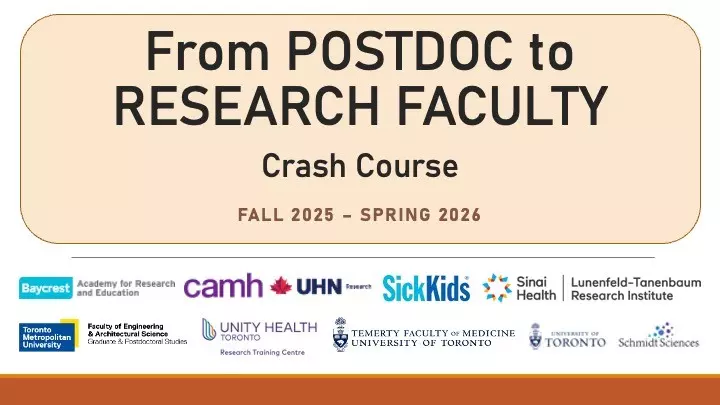
The From Postdoc to Research Faculty Crash Course provides comprehensive support and training for postdoctoral researchers as they begin their journey toward applying for and securing a research faculty position. The program covers a broad range of professional development topics, including CVs and cover letters, research statements, interviewing, chalk talks, and more, and is delivered through both virtual and in‑person sessions.
The University of Toronto’s “Developing Your Teaching Dossier” series is a four-module series for graduate students and postdoctoral researchers to explore strategies to reflect on their teaching and develop their teaching dossier. The self-paced asynchronous modules can be accessed by graduate students and postdoctoral researchers, internal and external to UHN.
The University of Toronto Centre for Teaching Support & Innovation’s “Building Your Teaching Dossier” resource provides guidance on creating a clear, well-organized document that highlights teaching philosophy, experience, goals, and evidence of effectiveness. It explains the key components of a strong dossier and offers advice on structuring materials and reflecting on individual teaching practices.
The “Future PI Slack” group is an informal peer mentoring group for biomedical postdocs who are interested in staying in academia. The group is used to communicate about grant applications, conferences, the faculty job search, and other related topics.
The McGill University Career Planning Service’s Academic Career Resources is a comprehensive resource providing guidance, examples, and articles on CVs and Resumes, Cover Letters, Teaching Portfolios, Interviews, Reference Letters, Salary Information, Academic Jobs, and Career Planning.
Each year, the UHN Office of Research Trainees (ORT) hosts a hands‑on workshop focused on strengthening grant, scholarship, and fellowship applications. Designed for trainees and postdoctoral researchers, the workshop covers key elements of persuasive research writing, including articulating research significance, aligning proposals with adjudication criteria, and crafting clear, compelling narratives. Participants receive practical tips, examples of successful applications, and opportunities for guided exercises and feedback, equipping them with strategies to communicate their ideas effectively and enhance their competitiveness across funding opportunities.
Skillsoft Percipio Learning Platform is a free virtual learning platform for TeamUHN that offers self‑paced courses and live classes to help build skills in leadership, business, communication, and more. The platform also includes training and educational content that can be applied toward the Project Management Institute’s requirements for the Project Management Professional (PMP) certification!
The Effective Mentorship Training Program is an annual program offered by the UHN Office of Research Trainees for UHN graduate students and postdoctoral researchers who will be supervising summer students. The program covers topics such as effective communication, aligning expectations, assessing understanding, establishing inclusive practices, fostering independence, and promoting professional development.
Meet UHN Alumni
Meet UHN alumni who have gone on to build impactful and influential careers as faculty members at leading institutions!
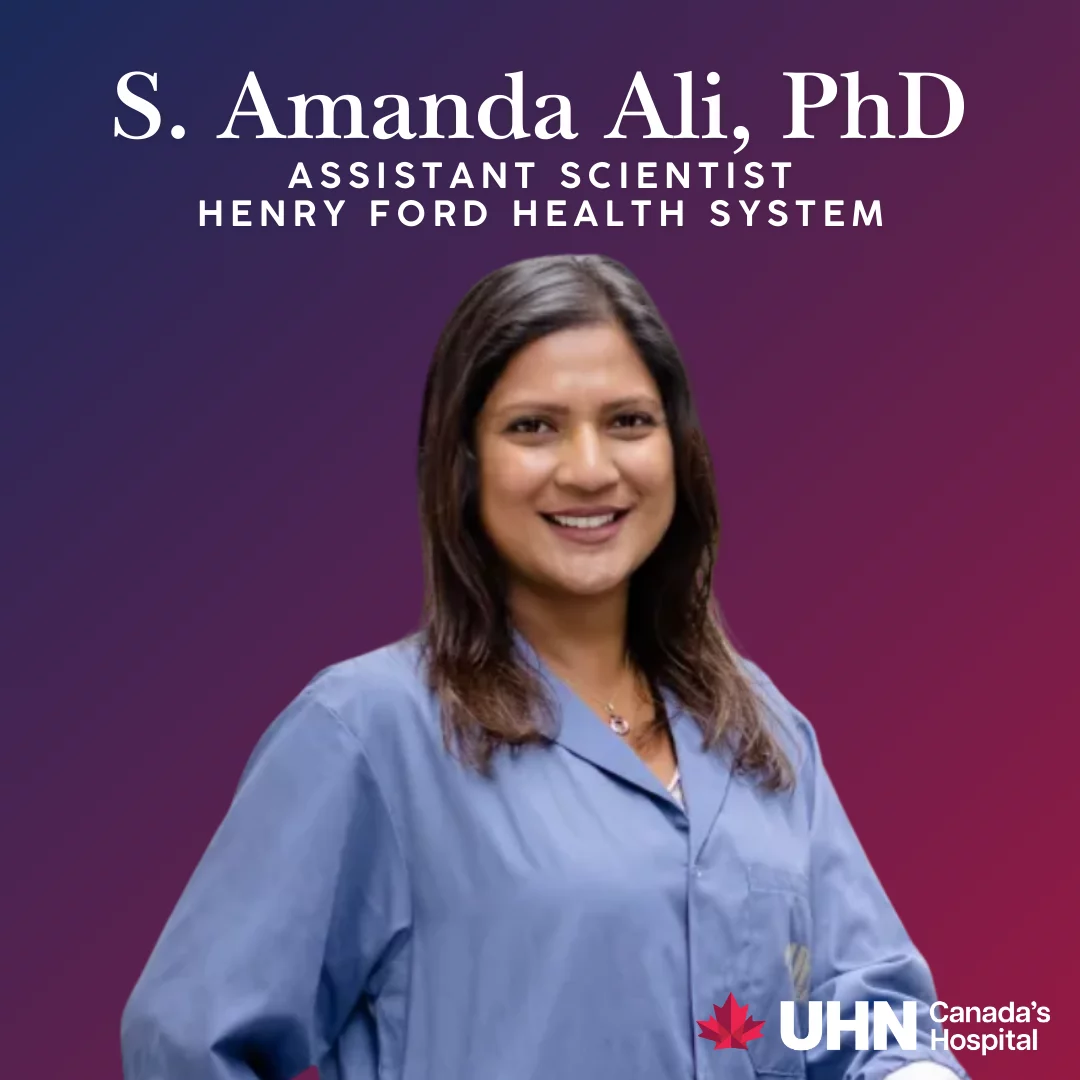
Dr. S. Amanda Ali is an Assistant Scientist at the Henry Ford Health System and an Assistant Professor at Michigan State University. Dr. Ali is also a former Postdoctoral Researcher at the Schroeder Arthritis Institute, UHN.
The most impactful advice Dr. Ali received while pursuing a faculty position was to shift her research narrative from “what I did” to “why it matters” – emphasizing what she can contribute rather than simply what she has done.
To learn more about Dr. Amanda Ali and her journey towards becoming and Assistant Scientist/Professor, you can read our alumni spotlight, written by Crizza Ching, ORT Communications Assistant and Graduate Student.
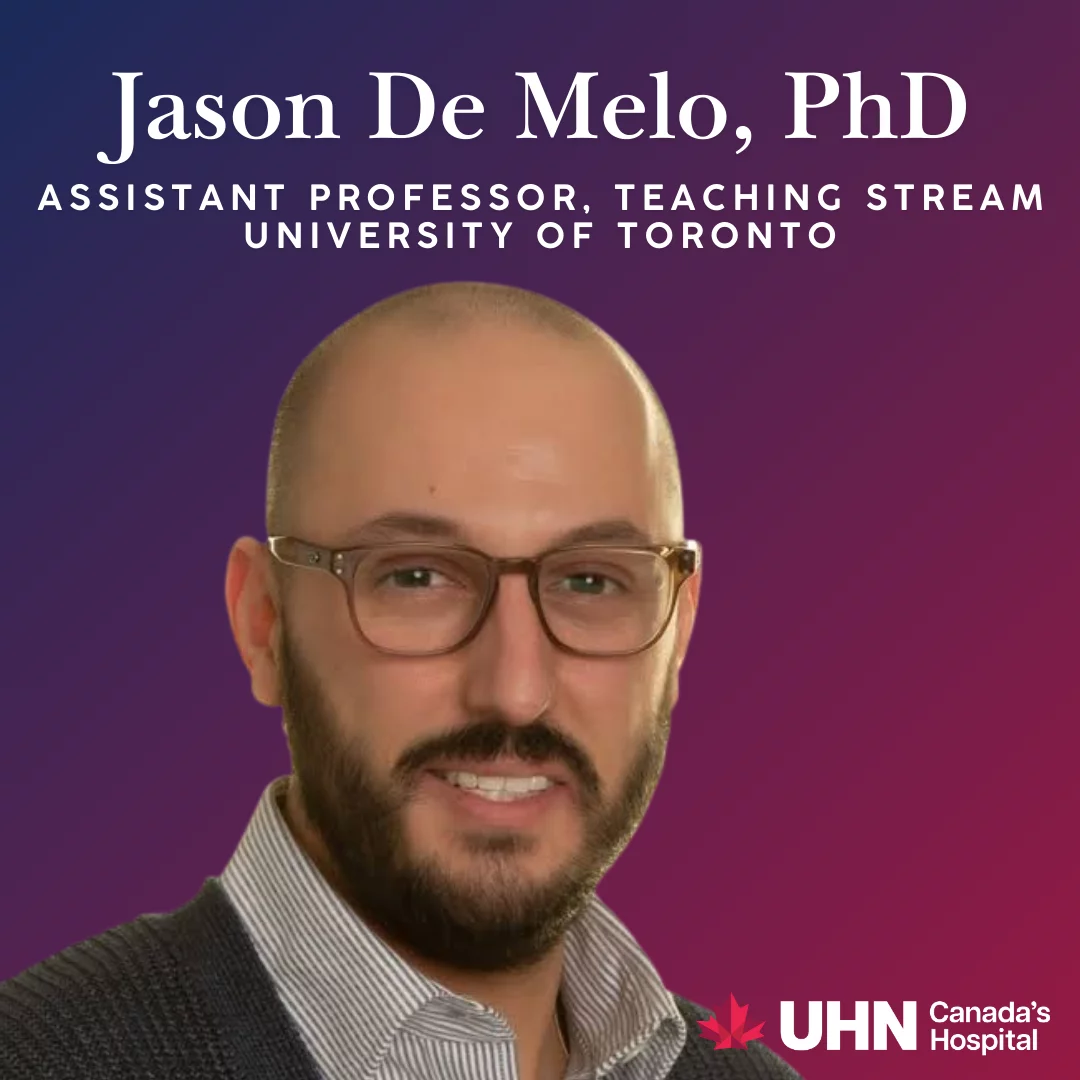
Dr. Jason De Melo is an Assistant Professor, Teaching Stream in the Department of Biochemistry, University of Toronto, and a former Postdoctoral Researcher at the Princess Margaret Cancer Centre. During his time at UHN, Dr. De Melo developed and taught a laboratory course on CRISPR gene editing, taught research methodology at the Unviersity of Toronto, and led the development of a new training program for graduate students and postdoctoral researchers at UHN.
A top piece of advice was to network with the other in the labs next door. These connections led to teaching faculty opportunities later on!
To learn more about the experiences and advice from Dr. Jason De Melo and several other academic professionals, check out our “Career Pathways in Academia” panel from October 29, 2025.
Disclosure: This resource is provided for informational purposes only. All efforts have been made to ensure the accuracy and clarity of the content; however, specific details, requirements, and expectations may vary across institutions and positions. Readers should always consult individual job postings or official organizational resources for the most current and authoritative information.